
There’s been some recent discourse about game writing, how it doesn’t get taken seriously and that there’s little out there that’s actually good (even to the extent of arguing the best we have is mediocre). I don’t agree with this, but then again, I’m not sure I’m even interested in defining whether game writing is “good” or not. I’m far more set on what makes game writing interesting.
Here’s the thing: writing quality is subjective. People could, and indeed have, written entire books on how to write well, and more specifically, how to write well for games. I would not be so arrogant to think I could possibly write anything satisfactory on that subject in a blog post. A lot of the recent discussion on this has come from writers within the industry who simultaneously have valuable insights and vested interests. The same is true for me; I’m a game researcher, but I’ve also worked as a game writer. It’s an emotive and personal subject, especially right now when the industry is on fire.
So, if I’m not going to regale you with my thoughts on goodness, then how can we define what makes video game writing interesting?
Haunted by Disco
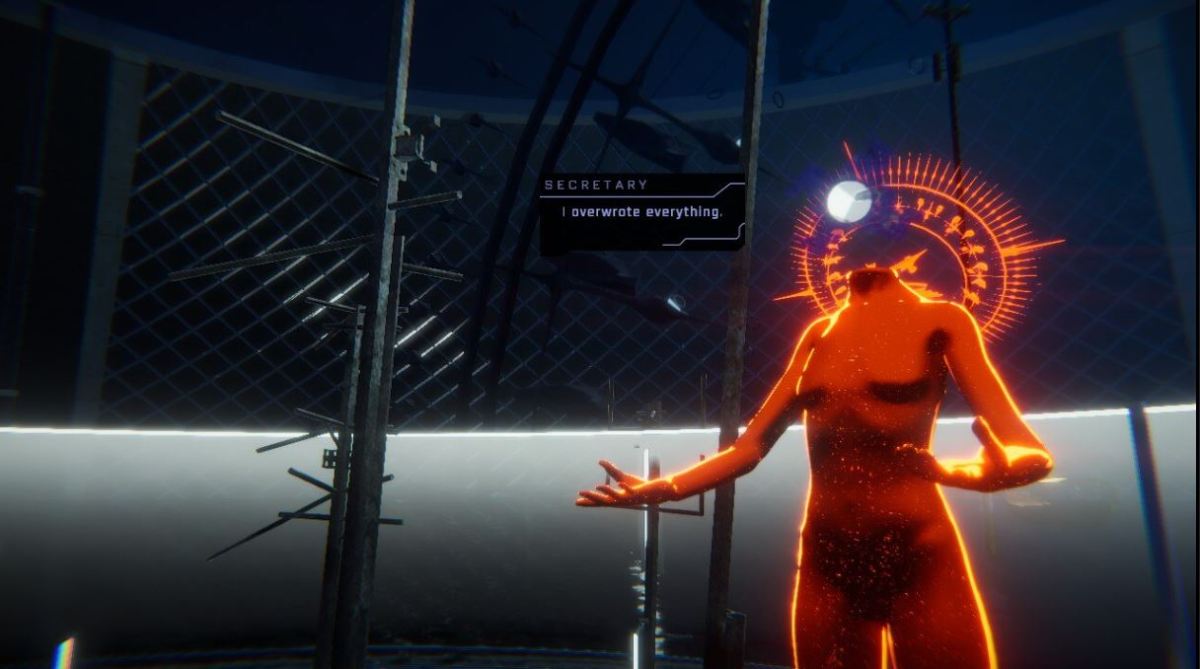
Before I get into my main example, I want to reflect a little on the game that got a lot of attention in the aforementioned discussions online: Disco Elysium. I’m not here to defend the quality of Disco’s writing, but I do think it is incredibly interesting. It’s overwritten, overwrought and ridiculous, yes. And that’s why it’s so memorable.
Why is it that there was a Disco Elysium bot with over 17,000 followers on Twitter? Because those chunks of writing it spat out are compelling, even and especially out of context. It has a distinctive texture. Say what you will about the game but it’s an incredible intrusive thought simulator, which is perhaps why people enjoy sharing bite-sized chunks of it online (the ultimate intrusive thought soup). Does this make the writing good? No, not necessarily. It does make it interesting, though. Interesting to think with and talk about – which is why any of us are still discussing it years after it came out.
Mirjam Eladhari’s concept of “retellings” as a benchmark for narrative quality is relevant here. Put simply, if players are motivated to retell their own emergent narrative experience, then it follows that it was interesting or engaging in some way. We’re specifically talking about writing here, rather than narrative, but I believe the sentiment still holds.
Funnily enough, shared interpretation of the written word is at the centre of the first interesting game writing example I want to share below.
Sphere To Square
1000xRESIST is a sci-fi adventure by Sunset Visitor that came out last year and it might be my favourite game of all time. The reasons for this go beyond writing (and I would argue you can’t really adequately understand video game writing outside of the context of narrative and game design, but that’s a separate article). It’s also the only game that’s ever asked me to interpret poetry.
Take this scene in Chapter 2 in which protagonist Watcher is talking with the NPC “Studious Shell” about interpretations of the Allmother’s poetry. You can choose to discourse about various different lines in her poem.
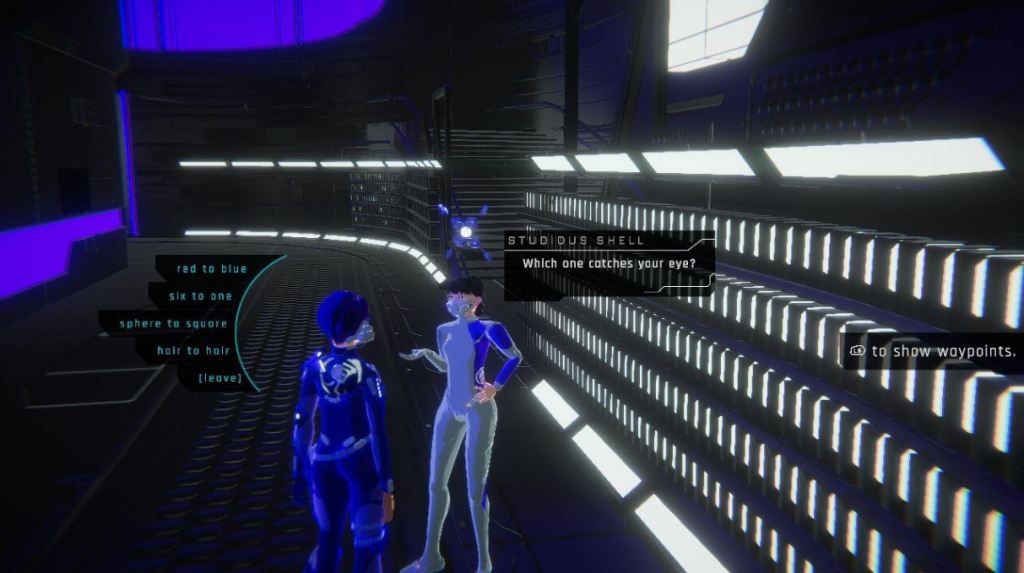
If you pick “Sphere To Square” you get the following dialogue:
Studious Shell: “The phrase I find most inspiring!”
Studious Shell: “A sphere…it could roll or bounce any which way…leading a sister astray.”
Studious Shell: “A square…it has sharp angles and flat surfaces…it stands strong in its place.”
Studious Shell: “But today i just realised…a sphere is a three dimensional object, and a square is only two!”
Studious Shell: “The cutting away of a whole dimension of ourselves…that is how focused we must be to serve our purpose!”
Studious Shell: “Whoa…deep.”
This dialogue tells us about the values that this society holds, including an appreciation of the written word and interpretation of meaning. We also learn more about the Studious Shell who delights in this apparent message of self-denial, and we get a sense of her cadence with frequent ellipses. The act of discussing the Allmother’s poetry belies its importance and significance in this world – an echo of the retelling concept mentioned before.
This writing is interesting to me because it creates a diegetic reason for the player to stop and consider the deeper meaning of the writing beyond face value, both within the fictional world and as craft. Whoa…deep.
Talk the talk
I used to be afraid of dialogue, until I worked as a Story Tech for the indie studio Die Gute Fabrik on Saltsea Chronicles, and then the majority of the writing I did was just that. Now I adore it. Finding the voice of a character through their particular speaking rhythm, vocabulary and idioms, while also producing interesting character interactions that serve the purpose of a scene can feel like clicking a puzzle box you’ve made into place.
Here’s another example of game writing that I think is interesting, this time from Mouthwashing. It’s a psychological horror game by indie studio Wrong Organ that also came out last year. The game is set on a freighter ship that’s crashed and stranded in space. It’s about toxic masculinity. And mouthwash.
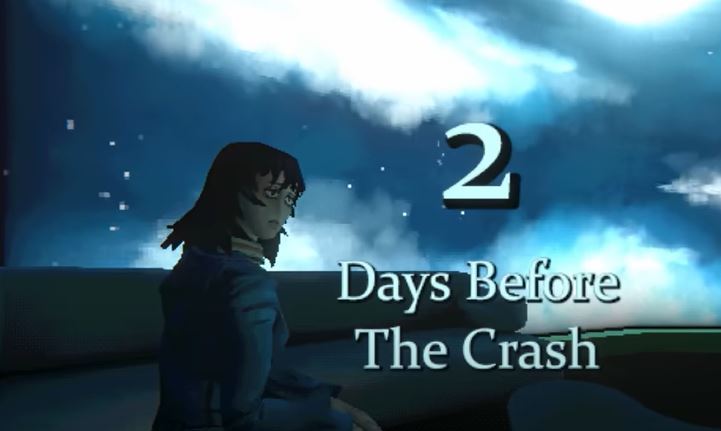
In one of the most memorable flashback scenes from the game, the only woman on board, Anya, has a conversation with the captain, Curly, in the middle of the night.
Curly: You doing ok?
Anya: Yeah. Can’t sleep.
Curly: I know how that is. I just toss and turn.
Curly: Or stare at the ceiling all night.
Anya: I actually kinda like the night time window screen.
Anya: If you can believe it.
Anya: So I just come look at it sometimes.
Anya: If you look really, really close you can see there’s a dead pixel in the upper right corner.
Curly: That so?
Curly: Hmmmmm.
Curly: Nope don’t see it.
Anya: In the back of my mind, it’s always there.
Curly: Now I’ll go bonkers looking for it.
Curly: Cheers.
Curly: … I don’t think it ruins the illusion though. It’s peaceful.
Curly: But maybe I’m just used to looking at the bigger picture.
Anya: How many days of transport do we have left?
Curly: Ah. Let’s see. Off the top of my head.
Curly: Around 237 days.
Curly: Just under –
Anya: Eight months.
Curly: …
Anya: Hey.
Anya: Why do you think Pony Express put a lock on the medical room door but not in the sleeping quarters?
Curly: Hmm.
Curly: I suppose for the same reason they put a lock on the cockpit.
Curly: Safety.
The imagery in this exchange takes on even greater significance if you understand its narrative context, but even without that, we can make a few points about why the writing is interesting. It is sparse, succinct, with longer lines of dialogue saved for key interjections by Anya. The conversation thus has a mostly staccato rhythm between the two characters, building up to the final word which only carries weight because of the set-up. Most memorable of all, perhaps, is the imagery of the “dead pixel” in the simulated sky they have on board. This works on numerous levels, as a mirror to inter-character relationships, differences in perspective, but also references the artifice of the video game medium itself.
Playing the gameworld, not the game
A concept I’ve found useful in my research is that of the “gameworld.” In Gameworld Interfaces, Kristine Jørgensen defines this as not just the playable game space but the underlying system that operates it. This is also relevant to my own definition of interesting games writing – its writing that makes me reflect on the gameworld and how it was created. Because here’s the thing, if we want video game writing to be taken seriously as a craft, then we have to encourage players to engage with it as a creative process.
So here’s my real hot take: focusing on immersion in video games is at the detriment of having them being appreciated as craft. Interesting games writing makes you pause and consider intentionality and authorship. Immersion, at least as its popularly used to refer to getting “lost” in a game, doesn’t leave space for the pleasures of engaging with the gameworld as artifice.
I don’t want to go to heaven.
Show me the dead pixels, let loose the sphere that would roll astray.
 Florence Smith Nicholls