
“Lara Croft is seen as the monstrous offspring of science: an idealized, eternally young female automaton, a malleable, well-trained techno-puppet created by and for the male gaze.”
So says Anne-Marie Schleine in her 2001 article “Does Lara Croft Wear Fake Polygons?” It’s not quite that simple though. Schleine goes on to list various other incarnations of Lara:
“Lara as Drag Queen”
“Lara as Dominatrix, Femme Fetale”
“Lara as Positive Role Model”
“Lara as Vehicle for the Queer Female Gaze”
Under that last subtitle, she writes:
“In the fantasy realm of Tomb Raider, the abject is transformed from repulsion to visceral thrill, opening up a queer channel to pleasure for the female gamer.”
Archaeologists have bemoaned the lack of diverse representation of their field in video games. Conversely, there has also been little discussion, to my knowledge, of video games as a “queer channel to pleasure” for the archaeologist. Here, I’d like to talk about both, and consider the intimacy of a perhaps unexpected form: the list.
[This is an interactive essay, click on the black boxes to reveal more text]
Pleasures of the stone
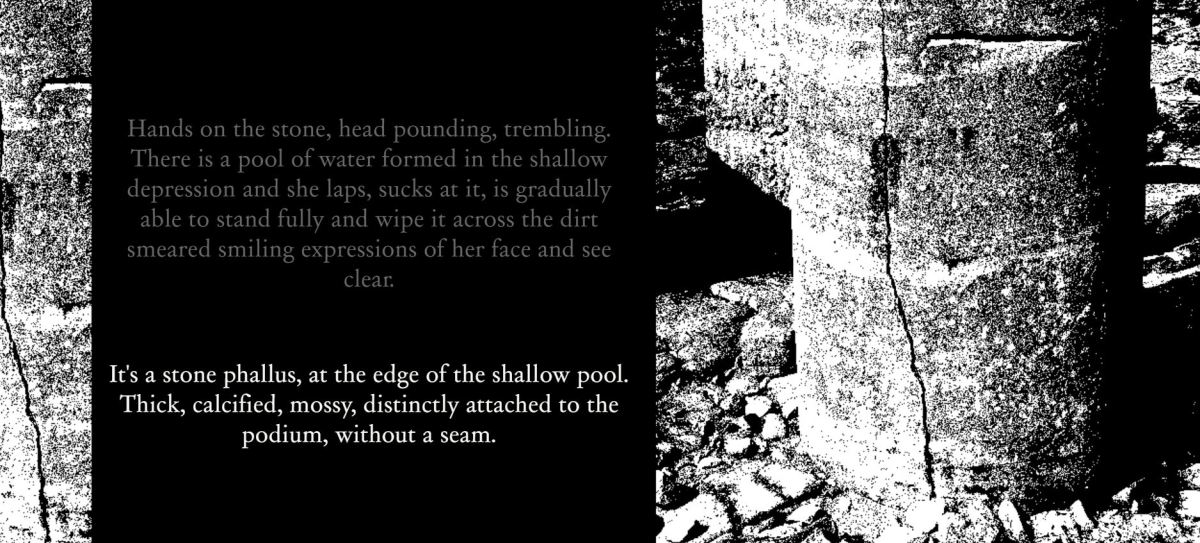
Oma Keeling’s The Becoming is a short erotic visual novel about an archaeologist returning to the ancient Roman cave that caused her to transition twenty five years prior. Suffice to say, it’s quite unlike any other representation of an archaeologist I’ve ever encountered in a game. On the face of it, it might not seem to have much to do with archaeology at all. It’s not about research or excavation or even looting. It’s a sensual experience, the interactions of a body with a cave caressed by others in the past, filled with descriptions of oozing, dribbling wetness.
Archaeologists often complain that games don’t reflect the academic rigour of the discipline, but what about
what it actually feels like to be an archaeologist;
the smell of wet soil;
slick clay under your uncertain feet;
the weight of steel-capped boots;
the universe of minute ridges in an animal bone pressed against your finger?
The Becoming reminded me of the embodied experience of being a field archaeologist, of being a body paid to do manual labour in the dirt and cold. It also made me think about the potential to explore encounters with the archaeological as a personal erotic experience in a fictional space, as it would clearly not be appropriate to do so in a professional one.
Furthermore, I love how the game starts by situating you within the protagonist’s body. She’s aged and can no longer stand the cold like she used to. What does it mean to inhabit an body that interacts with materials that age differently, that are always already ancient but, in a reverse Dorian Gray, somehow stay the same while you change?
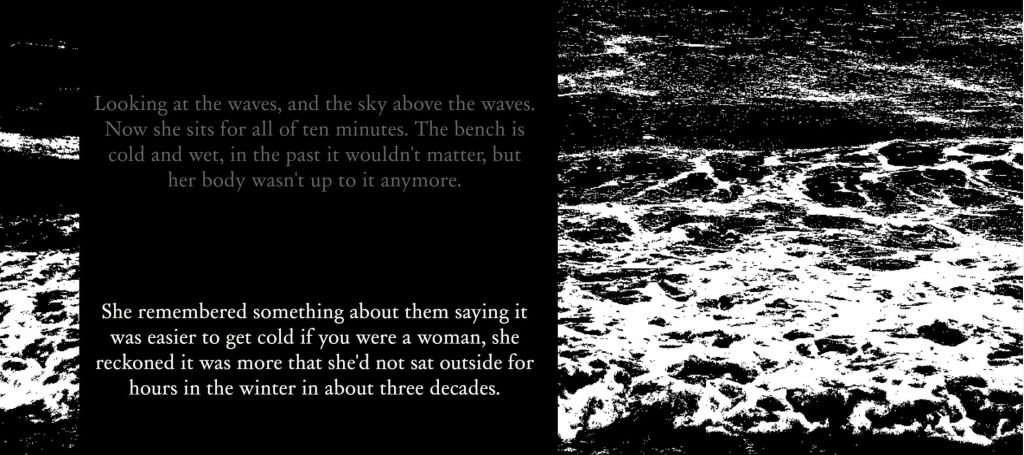
The ambient background noise of waves crashing then dissipating also resembles the lines of text that appear and then get moved up the screen as other lines are beckoned onto the bottom with the press of the space bar, making for interesting juxtapositions. In a way, the game is one long list.
Games as lists, lists as stratigraphy
The Becoming was made in the custom game engine, Videotome. Videotome was designed by Freya Campbell to make text-heavy games without the friction that she found as a writer using other engines like Twine. I was delighted to see her describe it as an engine “that could handle a simple list of lines and turn that into a game,” because it does seem to afford games that feel like kinetic lists.
The layers of text that appear in Videotome games also got me thinking about the layers of soil, clay and dirt that archaeologists contend with. Archaeologists call different layers or deposits strata, and their relationships are understood according to the principles of stratigraphy. I won’t dig too much into this topic, but basically, older deposits tend to be overlaid by later ones. Below is a section drawing I made back in 2016 when I was working as a commercial archaeologist in London to show the stratigraphical relationships between different strata that were excavated in a back garden in Nunhead.
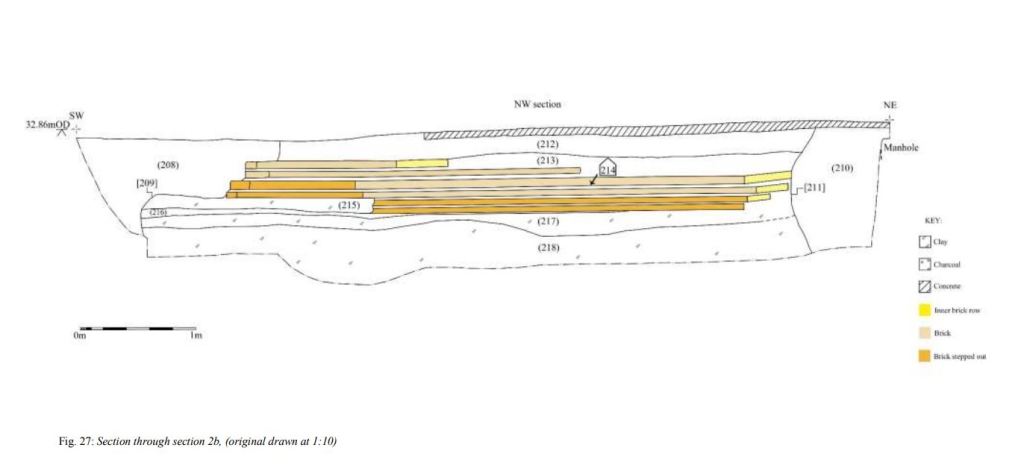
What else is stratigraphy but a way to draw a list?
Vocabulary for damage
I recently encountered another kind of list. I took part in a workshop on object condition checking with the Museum of Transology, a collection of over 1000 artefacts representing trans, non-binary and intersex people’s lives. The purpose of the workshop was to learn a standard procedure for recording any damage to objects prior to them being moved to a new exhibition space. We were given several sheets of paper with a long list of terminology for describing very specific ways that museum objects can be damaged:
Abrasion
Accretion
Bit rot
Blanching
Bleeding
…and the list goes on.
Did you know that the term “foxing” refers to the corrosion of paper, often resulting from mould spores? “Craquelure” sounds like a scheming fantasy character and refers to the accumulation of crackle often caused by changes in climate. Having exact vocabulary is important. It’s why the queer community has so many words for different types of identity. It’s also why the fascist Trump regime wants to excise a list of terms relating to queer people from scientific publications. Odd to think that some bigots likely wouldn’t question having a large vocabulary for damage to inanimate objects, but not the full range of human experience.
A list can be surveillance, power, control. A list can be categorisation, record. A list can be poetry, written into the soil over thousands of years. A list is confirmation.
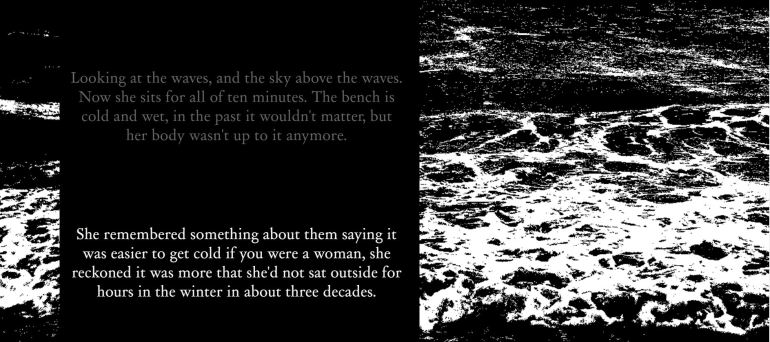
A list is confirmation.
We have been.
We are.
We will be.
 Florence Smith Nicholls